

- HOME
- Newsroom
- News Releases
- YKK AP Technology Museum Opens
YKK AP’s Technological History and Spirit of Monozukuri
YKK AP Technology Museum Opens
An Aluminum Melting and Extrusion Plant in Kurobe City, Toyama Prefecture, where the Architectural Products Business was Founded, Renovated and Preserved for Use
YKK AP Inc. (Headquarters: Chiyoda-ku, Tokyo; President: Akira Uozu) is pleased to announce that the YKK AP Technology Museum, which had been under construction at the YKK AP Kurobe Plant in Kurobe City, Toyama Prefecture, opened on November 14, 2024. Tours for the general public will begin on Saturday, November 23.

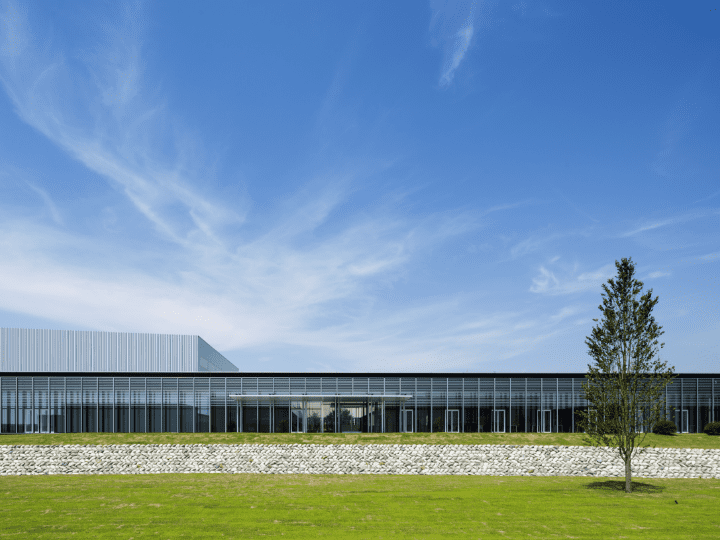
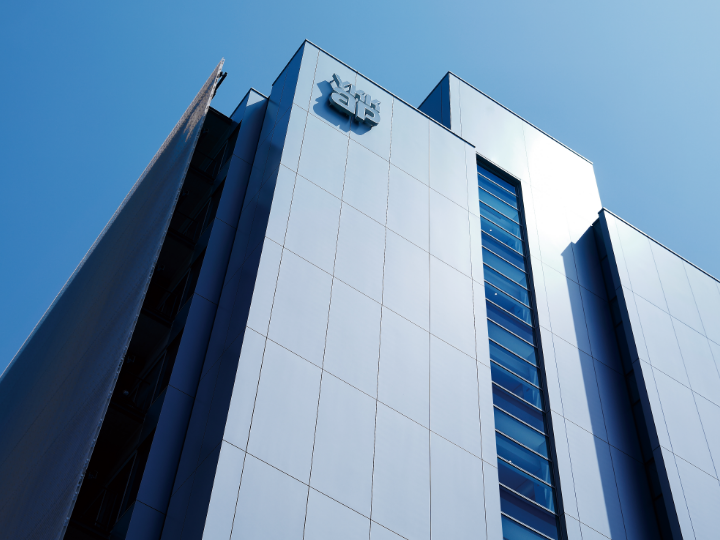
YKK AP Technology Museum Exterior
The YKK AP Technology Museum is an exhibition facility based on the concept of tracing the history of YKK AP’s manufacturing and technological challenges and connecting them to future growth. The museum introduces how the architectural products business began in 1959 with the installation of an aluminum extruder, and how it has grown and developed, focusing on manufacturing technology. In addition to conveying the history of architectural products technology and the thoughts of our engineers, it also shows YKK AP’s commitment to the challenge of "Technology Oriented Value Creation."
The building, which was originally an aluminum melting and extrusion plant completed in 1959 in Kurobe City, Toyama Prefecture, where the architectural products business was founded, has been preserved and renovated for use. The uninsulated building was retrofitted with full thermal insulation to provide energy-saving performance equivalent to a BELS rating (*1) of 5 stars. The curtain wall (*2) used for the newly renovated walls is made of 100% recycled aluminum, contributing to reductions in waste and CO2 emissions. In the future, we aim to use 100% renewable energy and reuse waste heat energy generated in production processes at the Kurobe Plant.
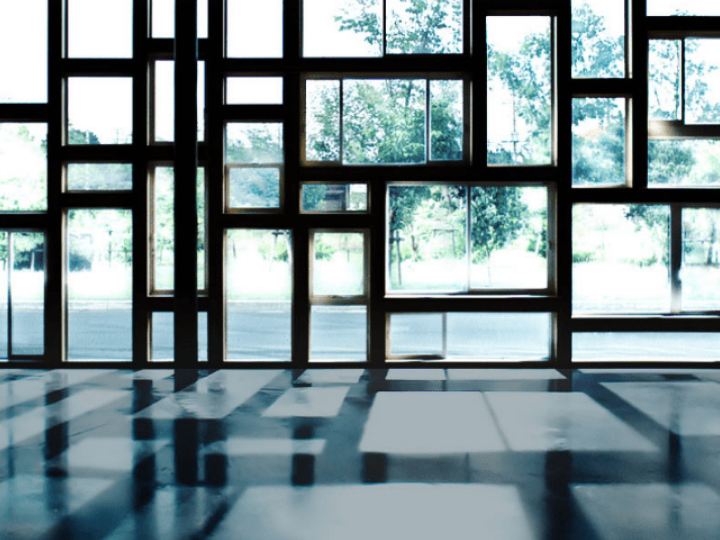
While retaining the steel truss roof and steel sashes from the time of the building’s construction as an exhibition facility, the building is covered with a curtain wall on one side, a fusion of old and new architecture that dynamically enlarges the space. In addition, through the effective use of natural light in the exhibition and spatial design that creates a connection with the outdoors, the building gives a sense of YKK AP’s identity as a window company.
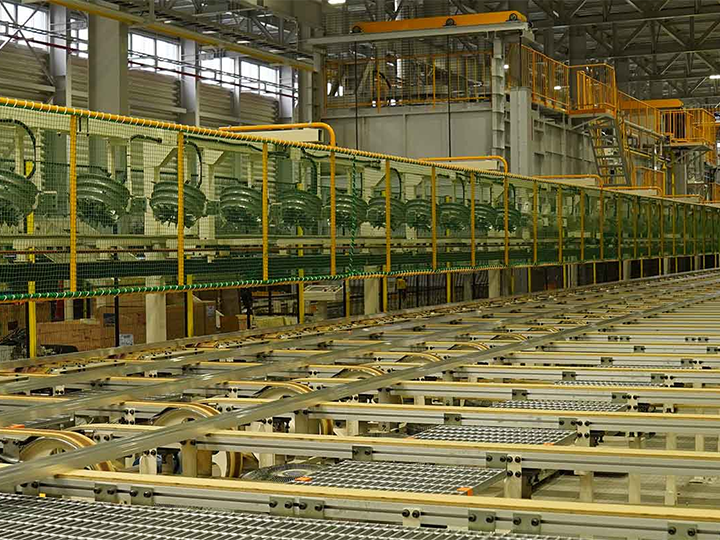
The exhibition consists of seven zones, introducing the history of YKK AP’s technology and its spirit of monozukuri, including the technologies that have supported the growth of the company's business, the high functionality of its products, and its efforts to take on new business models. The exhibits include a company-built aluminum extruder (1987) that was used in actual production.
〈Highlights of the YKK AP Technology Museum〉
・Renovation of an aluminum melting and extrusion plant completed in 1959. Energy-saving performance equivalent to a 5-star BELS rating through full-scale thermal insulation retrofitting
・A curtain wall made from 100% recycled aluminum. A target of 100% renewable energy has been set for the energy to be used.
・Presentation of the growth and challenges of the architectural products business with a focus on technology, including an exhibit of a company-built aluminum extruder (made in 1987)
■ Access to the YKK AP Technology Museum
|
Open to |
Everyone is welcome to enter and use the museum |
|
Opening hours |
9:00–16:30 (last admission at 16:00) |
|
Closing days |
Mondays, national holidays (open if they fall on Saturdays or Sundays), Golden Week period, summer vacation, year-end and New Year’s holidays |
|
Visiting guide |
Admission and parking: Free 〈For reservations and inquiries, please contact〉 |
■ Overview of the YKK AP Technology Museum
|
Name |
YKK AP Technology Museum |
|
Building owner |
YKK AP Inc. |
|
Location |
200 Yoshida, Kurobe City, Toyama Prefecture |
|
Design |
Architecture, Urban Planning and Landscape design workshop |
|
Construction |
Daiichikensetsu Corporation, KUROBE EMUTECH CORPORATION |
|
Exhibition |
TANSEISHA Co., Ltd. |
|
Structure |
Renovation of an existing building |
|
Date completed |
November 14, 2024 |
|
Size |
Total floor area: 4,462 square meters |
|
Construction period |
January 2023–October 2024 |
|
Visitors target |
FY2025: 5,500 |
|
Total cost of construction |
Approx. 2.9 billion yen |
*1: Abbreviation of "Building-Housing Energy-efficiency Labeling System" This is a third-party certification system that indicates the energy-saving performance of buildings operated by the Association for Evaluating and Labeling Housing Performance. An organization registered with the association objectively evaluates energy-saving performance and provides a six-star rating based on primary energy consumption.
*2: An exterior wall that does not directly bear the load of the building, made of materials such as aluminum and glass for its components, and with columns and beams as its main structure.
[Exhibition Overview]
〈Founding〉Area
Chapter1. Beginnings of the Architectural Products Business —How did a Zipper Company Come to make Architectural Products?—
We gained experience in manufacturing aluminum extrusions for table edges(*3) and showcases, and our technical capabilities in extrusion greatly improved with the production of spandrels(*4), which are wide but very thin, requiring advanced extrusion techniques. The windows of YKK AP’s plants had their steel sashes replaced with "AS-200" aluminum sashes, the first of their kind developed in-house. Following the development of aluminum fittings, YKK developed "Hi-Sash," an aluminum sash for residential use, and turned the architectural products business into a new pillar of YKK’s business. The video theater depicts the history of YKK AP from its founding to the present, as well as the spirit of monozukuri that lies at the foundation of the company.
*3: A component used to protect the side face of the top surface of a table.
*4: A decorative panel made of metal, used as building materials. Mainly used for exterior walls and ceilings of buildings.
〈Development〉Area
Chapter2. Changing Japanese Housing with Aluminum Sashes
In an era of rapid economic growth in Japan, changing wooden windows to aluminum sashes required mass production of high-quality products. It also marked the start of integrated production, with the world undergoing a dramatic shift to high-mix low-volume production. This change was backed by a history of technology that always sought monozukuri (Japanese manufacturing) of high-quality products while responding to the needs of the times. The profiles used to make a wide variety of aluminum sashes must be manufactured with high precision, sufficient strength, and an attractive appearance. This area presents our technological development efforts in casting, tooling, extrusion, and surface treatment to achieve this goal.
Chapter3. Creating Sashes and Glass with Thermal Insulation for a Comfortable Home
In the 1980s, there was growing interest in energy conservation. Engineers raised the new theme of "thermal insulation" as a way to balance energy efficiency and a comfortable living environment. Starting with cold regions, we worked on the development of insulation products for windows and doors with thermal insulation sashes and insulating glass. This involved the development of "profile thermal insulation sashes" that cut off heat transfer in aluminum profiles, as well as "aluminum-vinyl composite sashes" and "vinyl sashes” made by the extrusion molding of vinyl, which offers excellent thermal insulation properties. In addition, we quickly began working on technology to insulate glass, which takes up a large proportion of a window’s surface area. This section discusses the development of technologies for manufacturing "insulating glass" and sputtering(*5) technology for "Low-E glass" to achieve the required performance and quality.
*5: A treatment technology that forms a film on the glass surface to enhance functions such as thermal insulation performance.
〈Transformation〉Area
Chapter4. From Sashes to Windows. Taking on Responsibility for Every Part of the Window
Overseas, industrially produced windows were manufactured in factories, but in Japan, the typical distribution channel was for frames and glass to be delivered to architectural product distributors, who then assembled them. In 2006, by creating quality windows at our own plants and taking responsibility for all aspects of windows, we worked to build a new business model, the "window business," to convey the new value of windows to the world. We developed a production line to manufacture a large variety of windows for a single house by synchronizing the glass panels at a dedicated window factory, from where they are delivered to the installation site. This section communicates our efforts regarding the technologies that support the window business, such as technologies to "enhance the design, function, and performance of windows," "create a wide variety of window products," and "deliver windows."
Chapter5. Creating Vibrant, Attractive Urban Spaces with Curtain Walls
The curtain wall business is a new area in which we have worked to further develop our architectural products business. This section presents our technological challenges in realizing architects’ ideas through our advanced design proposals and engineering capabilities. These challenges have led to improvements in the technological capabilities of each of YKK AP’s businesses.
Chapter6. From Kurobe to the World
In our overseas operations, we develop and manufacture products locally to suit the climate and culture of each country. This area presents the development of products with the functions and performance required in local markets, the materials and resources needed to realize them, our production technology initiatives, and the development of businesses rooted in local markets through integrated production.
〈Challenges〉Area
Chapter7. We Build a Better Society Through Architectural Products
This area introduces YKK AP’s Purpose, "We Build a Better Society Through Architectural Products," its challenge to achieve "zero environmental impact" in its business activities through manufacturing, and its efforts to develop new products and technologies
〈YKK AP Predecessors Hall〉—Hisamasa Yoshida, Founder of the Architectural Products Business, and his Elite Team—
The life and achievements of Hisamasa Yoshida, the father of the architectural products business, are recounted in an exhibition and video.
[Facility images]
〈Exterior〉

Building with a curtain wall on one side
〈Interior〉

Download high-resolution images below.
Download the full news release in PDF format.
* Please do not transcribe or convert for a different use the YKK AP website without permission.
* The news releases posted here were current at the time of their publication.